
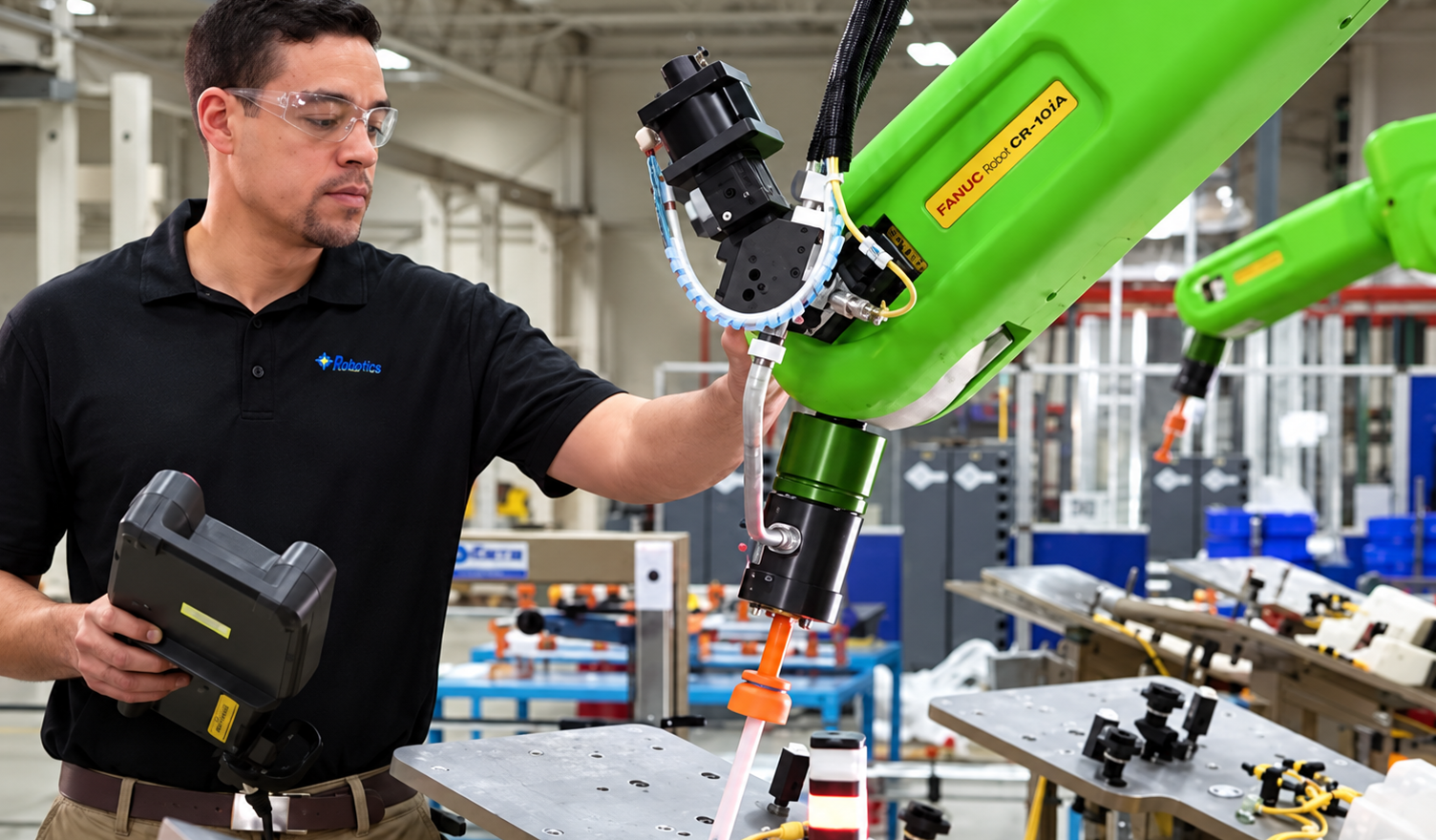
As businesses across the Tri-State region introduce more robotics and automation, employers, employees and communities face important questions about the future of work.
As businesses across the Tri-State region introduce more robotics and automation, employers, employees and communities face important questions about the future of work.
Robotics and the Changing Workplace
Businesses throughout the Tri-State region are adopting robotic technology to remain competitive. This shift is creating new opportunities for efficiency while raising concerns about the skills workers will need as industries continue to evolve.
In a 2019 report by WVXU Cincinnati Public Radio, Marvin Dejean of Gilead Sanders discussed why the region needed to prepare strategically for the growing influence of artificial intelligence, robotics and other emerging technologies.
Automation Is Changing Multiple Industries
Large organizations were already expanding their use of robotic systems. Amazon was introducing additional robots into its fulfillment operations, while Walmart was deploying automated equipment to support inventory management, shipment processing and floor cleaning.
Manufacturing companies were also investing in robotics. Procter & Gamble had announced plans to significantly expand the number of robots used in its operations.
These developments demonstrated that automation was becoming part of everyday business operations, rather than remaining limited to specialized industrial settings.
What Does This Mean for Employees?
The impact of automation extends beyond factory production lines. Repetitive tasks in offices, warehouses and service businesses can also be affected as technology becomes more capable.
At the same time, certain tasks still require human judgment, adaptability and attention to detail. Businesses must evaluate where automation can improve performance and where employees continue to provide essential value.
The Importance of Workforce Development
One of the central challenges is helping employees develop the skills required for changing workplaces.
Business leaders need to consider how existing workers can be trained for new responsibilities as technology changes their roles.
Preparing for automation requires coordination between businesses, educational institutions and local governments. These groups can work together to identify emerging skills, improve training opportunities and support workforce transitions.
Planning for the Future of Work
Organizations that approach robotics strategically can better understand the opportunities and risks associated with technological change.
Rather than focusing only on individual machines or software tools, business leaders should examine how automation affects their workforce, operations and long-term competitiveness.
The discussion is not simply about whether more robots will be introduced. It is about how organizations and communities prepare people to work alongside increasingly capable technology.
Original reporting: Ann Thompson, WVXU Cincinnati Public Radio.Read the original report